
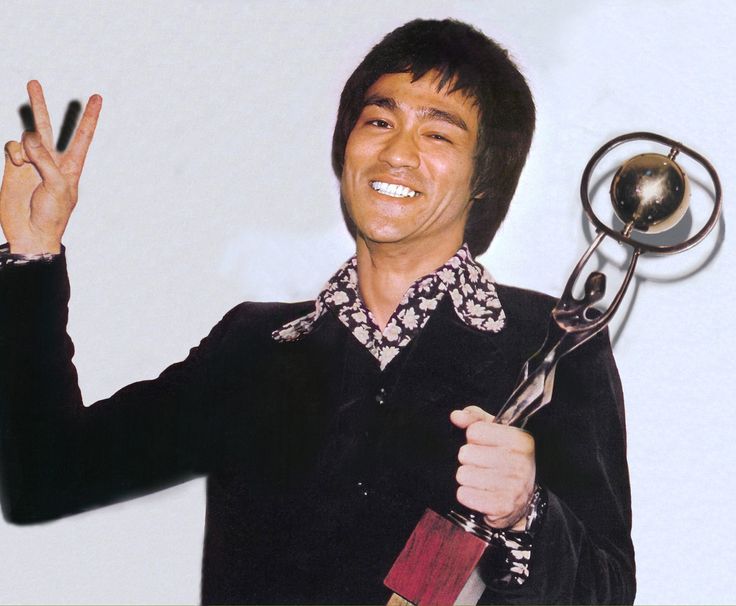
Background
This famous December 9, 1971 interview of Bruce Lee in Hong Kong has been referred to as The Last Interview because it was his final radio interview. In it he talks about fame, martial arts and the movie The Big Boss. This interview was conducted by British radio and television broadcaster Ted Thomas who was based in Hong Kong for many years. Thomas was also a prolific voice actor who dubbed dialogue in over 1,000 movies including doing the voice of Lee in his movies (Spotlight and Thousand Voices).
Part 5: Fame
Ted Thomas: I think you’d probably agree Bruce the thing that limited the appeal of Chinese films to Western audiences is that it’s very unusual to find a Chinese actor who can act. And when I say that I mean act in the Western style in the manner that would make non-Chinese pay money to see them. Ahhh, you seem to have crossed that barrier. How do you think you achieved it? Do you think it has to do with your time in the United States? You studied there, didn’t you?
Bruce Lee: Yes. It definitely has you know. Because when I first arrived you know I did the Green Hornet you know television series back in ’65. And if I look around man, I mean I saw a lot of human beings. As I look at myself, I was the only robot there, because I was not being myself and I’m trying to accumulate external security, external ah technique, a the way to move my arm, the way…but never to ask and say what Bruce Lee would have done if there were, if such a thing happened to me. When I look around I always learn something that is, to be always yourself and to express yourself, to have faith in yourself. Do not go out and look for a successfuls personality and duplicate him. Now that seems to me that, that is the prevalent thing happening in Hong Kong. Like they always copy mannerisms, but they never start on the very root of his being and that is, ‘how can I be me?’ I mean you see I never believed the word ‘star’. That’s an illusion man. I mean that’s something public calls you. You see. And when you become successful, when you become famous, it’s very, very easily to be blinded by all these happenings. Everybody come up to you, Mr. Lee. When you have long hair they will say, ‘Hey man like that’s in man, baby, that’s the in-thing.’ But if you have no name they will say, ‘Boy look at that disgusting juvenile delinquent.’ I mean too many people are yes, yes, yes to you all the time you see. So unless you really at that time have gone through quite a lot and understand what life is about and that right now man some game is happening, and realizing such that that is a game, fine and dandy, then it’s all right. But most people tend to be blinded by it because, I mean, if things are repeated too many times you believe in it and it becomes a habit.

When I look around I always learn something that is, to be always yourself and to express yourself, to have faith in yourself. Do not go out and look for a successful personality and duplicate him.
Ted Thomas: The danger is, is, is believing the public impression of you.
Bruce Lee: That’s right man.
Ted Thomas: Ah, your father warned you about the bad things in show business. Have you met them, too? Apart from the illusion?
Bruce Lee: Of course, of course.
Ted Thomas: You seemed to have come out of it remarkably well.
Bruce Lee: Well let me put it this way ah to be honest and all that, I am not as bad as some of them, but I definitely am not saying that I am a saint. OK?


Part 6: Martial Arts
Ted Thomas: Bruce, could we go back to the fighting, because like it or not, it is thing you are ah mainly identified with at this moment.
Bruce Lee: Yes.
Ted Thomas: You know a number of styles of fighting the Karate, Judo, Chinese Boxing….
Bruce Lee: Yes.
Ted Thomas: And it’s a question you must have been asked hundreds of times before…
Bruce Lee: Yes.
Ted Thomas: Which do you think is the most effective?
Bruce Lee: You see ah my answer to that is this, there is no such thing as an effective segment of a totality. By that I mean I personally do not believe in the word ‘style.’ Why? Because unless there are human beings with three arms and four legs, unless we have other group of beings on earth that are structurally different from us then there might be a different style of fighting. Now why is that? Because we have two hands and two legs now. The important thing is, ‘How can we use it to the maximum?’ In term of path well straight line, curved line, ah, ah, ah round lines they might be slow, but depending on the circumstances sometimes that might not be slow. And in terms of legs you can kick up, straight. Same thing, right? Physically, how can I be very so well coordinated? That means you have to be an athlete. That means you got to jogging and all these basic ingredients, right? Now and after all that, then you ask yourself, ‘how can you honestly express yourself at that moment?’ And being yourself when you punch, you really want to punch. Not you want to punch, because trying to avoid not getting hit. But to really be in with it and express yourself! Now that is the out.., that is to me the most, one thing and that is, ‘How can I in the process of learning how to use my body, to understand myself?’ Now the unfortunate thing is now there is boxing which use hands, judo which is throwing. I’m not putting them down mind you. But I’m saying one thing that is a bad thing and that is, because of ‘style’ people are separated. They are not united together, because styles became law man. But the original founder of the style start out with hypotheses. But, now it has become the gospel truth. People that go into it man became the product, it doesn’t matter how you are, who you are, how you are structured, how you are built, how you are made. It doesn’t matter, you just go in there and be that product. And that to me is not right.
Ted Thomas: Bruce Lee, thank you.
Bruce Lee: Ted, I thank you man.
But I’m saying one thing that is a bad thing and that is, because of ‘style’ people are separated. They are not united together, because styles became law man.
Resources:
Last Radio Interview, with Ted Thomas, Hong Kong, December 9th, 1971.
Bruce Lee and Ted Thomas image, Wikizilla.

Hong Kong Image, Flickr, 1971.

Hong Kong Image 2, British Pathe, Youtube.
Bruce Lee Training James Coburn image from Bruce Lee Backyard training. Bruce Lee Enterprises, LLC is the exclusive owner of the use of Bruce Lee’s name, image, archival footage, and writings.
Ted Thomas on his time in the Spotlight, Postmag, September 28, 2014.
Man of a Thousand Voices, Hong Kong Voice Actor Ted Thomas on His Prolific Dubbing Career!I Vantage Point Interviews, Brett Hoenick, May 17, 2017.
The Big Boss, Golden Harvest, played Cheng Chao-an. Bruce Lee plays a non-violent man who works in an ice factory. His family members start to disappear. First breakout movie. 1971, 1 h 39m (IMDB).
Long Beach International Karate Championships, August 2, 1964, Bruce Lee Enterprises, LLC is the exclusive owner of the use of Bruce Lee’s name, image, archival footage, and writings.
The Green Hornet, 20th Century Fox Television. Season 1, Episodes 1 – 26, aired September 9, 1966 – March 24, 1967. A series where Bruce Lee plays a newspaper publisher’s valet and crime fighting sidekick. Bruce Lee gained much attention with his realistic martial arts. 1966-1967 (IMDB).
Bruce Lee Award image, Pinterest.
Bruce Lee glasses image, Pinterest.
AI Narration provided by elevenlabs.io. Bruce Lee quotes read by AI.