
Listen to the podcast. Bruce Lee quotes read by AI. 

Part 1: Making the Game of Death
In 1972 Bruce Lee shot around 100 minutes of raw footage for a film called Game of Death. He never completed the film because he got called off to star in the Co-Hollywood film Enter the Dragon. The plot centered around a crime boss kidnapping Hai Ten’s family (played by Lee) to force him to fight multiple levels of a Pagoda for an unidentified treasure at the top.
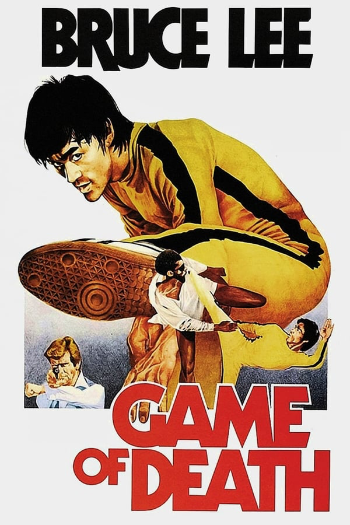
In 1978, Golden Harvest released a version of Game of Death using only around 11 minutes of the original footage. The new plot was very different from the original story and involved a martial artist battling against organized crime and having to pretend to have died.
Do yourself a favor and do NOT watch this version of the film. It is bad, very bad. Instead of seeing Bruce Lee through the film we get to see a body double, clips from previous Bruce Lee films, and at one point a cardboard cut out of his Face. If you decide to watch this, do it with the expectation that it is so bad that it is funny.

The fact that the original film was never completed is such a shame because the footage is some of the best martial arts fighting I have ever seen. Each level of the Pagoda is defended by a martial arts master from different styles including Hapkido (played by Ji Han-Jae), Eskrima (played by Dan Insanto), and Jeet Kune Do (played by Kareem Abdul Jabbar). Bruce Lee’s message throughout the film is that martial artists should be flexible and not stuck in any one style.
Dan Inosanto was Lee’s friend and assistant instructor. He took leave from his teaching job to play the Eskrima expert defending the third level of a Pagoda. “And on the third level there was supposed to be a person who is trained in weaponry and so he chose me to do the part.” (Life, page 383, I Am, Game).


I strongly encourage you to watch the original footage instead of the 1978 film. Thankfully you have several options. One of the best options is the documentary, A Warrior’s Journey which includes a 30 minute special cut of the original footage. This is edited well and flows nicely. I would rate the sound effects and dialogue as the best of all the versions I have seen. One drawback is that the poor video quality. The documentary before the film is also worth watching.
There is also the Game of Death Redux, from the Criterion Collection His Greatest Hits. The video quality is the best of all the versions. The story edit is also good. However, the sound effects are so distracting that it takes away from the amazing footage. Also, the voice overdub does not sound realistic.


One of the best options is the Final Game of Death found on the excellent collection, Bruce Lee at Golden Harvest. This documentary includes ALL the raw footage filmed by Bruce Lee including multiple takes of different scenes. Watching the different takes is such an enjoyable experience. This ends with a special cut of the Game of Death footage and adds a nice prologue to show the backstory of the crime boss kidnapping Hai Ten’s family. The film quality is good but in my opinion not quite as good as Game of Death Redux. There are also nice sound effects, music, and dialogue but I don’t think the sound effects are quite as good as A Warrior’s Journey.
You can’t go wrong with any of these versions of the original footage. It is a masterpiece of fighting and storytelling plus you get to see the iconic yellow jumpsuit! The best case scenario would be to watch the raw takes from Final Game of Death, the cut and sound from A Warrior’s Journey, and have the video quality from Game of Death Redux. Movie-censorship.com does an amazing detailed breakdown between the different versions of Game of Death.
Part 2: Timeline of Releases
It helps to better understand the Game of Death by looking at the following timeline of events:
1970
Lee begins screenplay for the movie The Silent Flute (Letters). Lee included different levels of meanings in the film representing both martial arts and philosophy. There was also a quest to find valuable knowledge. Lee will reuse both of these ideas for The Game of Death.
1971
Bruce Lee visits Hong Kong to see his family. He is greeted as a returning hero because reruns of The Green Hornet have become very popular. He then makes a decision to return to Hong Kong to act in movies. He makes an agreement to work with producer Raymond Chow of Golden Harvest studios.
July, 1971
Release of The Big Boss. This is Lee’s first starring role and becomes a blockbuster breaking records in Hong Kong (Letters).
December, 1971
Moves family to Hong Kong and eventually makes Fist of Fury, Way of the Dragon, Game of Death, and Enter the Dragon.
1972
Fist of Fury is released breaking the previous records set by The Big Boss.
May, 1972
Lee travels to Rome to look for filming locations for his next movie The Way of the Dragon. He wrote, starred, and produced Way of the Dragon
October-November, 1972
Filmed approximately 90 minutes of raw footage for the Game of Death film including multiple fighting scenes in the Pagoda (Words, Letters).
November 23, 1972
Lee signed a contract with Warner Brothers to make Enter the Dragon which interrupts the completion of The Game of Death (Life, page 408).
February, 1973
Releases the Golden Harvest/Warner Brothers film Enter the Dragon (Letters).
July 20, 1973
Lee passes away due to cerebral edema (Letters).
1974
Lee’s widow Linda Lee decides to move back to the United States to raise her children who were then 8 and 4. In order to support her family she sells Lee’s ownership in Concord Films which had produced Way of the Dragon, Enter the Dragon, and the incomplete Game of Death (One Inch Punch; Concord Productions).
1978
Golden Harvest finished the film Game of Death using approximately 11-12 minutes of the original footage. This version is not well received (Words).
1990
Bruce Lee: A Warrior’s Journey documentary released by Bruce Lee expert John Little. It includes a 30 minute special cut of the original footage of Game of Death. The film is excellent but uses poor video quality. 1h 40m (IMDB).
2013
The excellent I am Bruce Lee documentary is released using multiple clips from the Game of Death.
2019
Game of Death Redux was released and used approximately 30 minutes of the original footage. The video quality is excellent but the dubbing is poor (IMDB).
2023
Final Game of Death was released which includes all 2 hours of raw footage and a 30 minutes special cut of the film along with a documentary. It shows multiple takes of the same scene. It added a new introduction to the film showing that Lee’s family was kidnapped. Both the story, video, and audio are excellent 3h 43m (IMDB).
Well there you have it. The long and twisted journey of the Game of Death. An amazing concept and some of the best martial arts fighting on film brought down by the poorly executed 1978 version of the film. No one knows what would have happened to Game of Death if Lee had lived, but I suspect that it would have been another smash hit.
Resources:
Game of Death. A movie star fakes his death to investigate who is trying to kill him. Includes only 11 minutes of original footage from 1972 Game of Death footage. Uses a stand in actor, bandage coverings, and a cardboard cutout to represent Bruce Lee. I suggest you watch one of the other versions instead! 1h 40m (IMDB).
Bruce Lee: A Warrior’s Journey. An excellent documentary produced by Bruce Lee expert John Little author of the Bruce Lee Library books. Includes a 30 minute special cut of the original footage of Game of Death. Excellent editing of footage but uses poor source video. 1h 40m (IMDB).
Game of Death Redux. An edit of Game of Death using unreleased footage. Excellent video, but poor sound dubbing. 39m (TMDB).
The Final Game of Death. Documentary on the original Game of Death movie. Includes all 2 hours of raw footage and a 30 minute special cut of the film. Added a new introduction to the film showing that Bruce Lee’s family was kidnapped. 3h 43m (IMDB).
Game of Death Version Breakdown.
I Am Bruce Lee. Excellent Bruce Lee documentary including his family, friends, and training partners. Includes much footage of Bruce Lee talking in interviews. 1h 34m (IMDB).
Bruce Lee Podcast, One Inch Punch: The tiny startup with a giant global fan base, 7/19/2016.
Wikipedia, Concord Productions, retrieved 06/04/2024.
Letters of the Dragon: The Original 1958-1973 Correspondence, John Little, Editor, Tuttle Publishing, 1998, 2016. Volume 5 of the Bruce Lee Library, commissioned by the Bruce Lee Estate. Letters to friends, family, and business associates. Put together by John Little, Bruce Lee historian.
Circle of Iron Rotten Tomatoes.
AI Narration provided by elevenlabs.io.